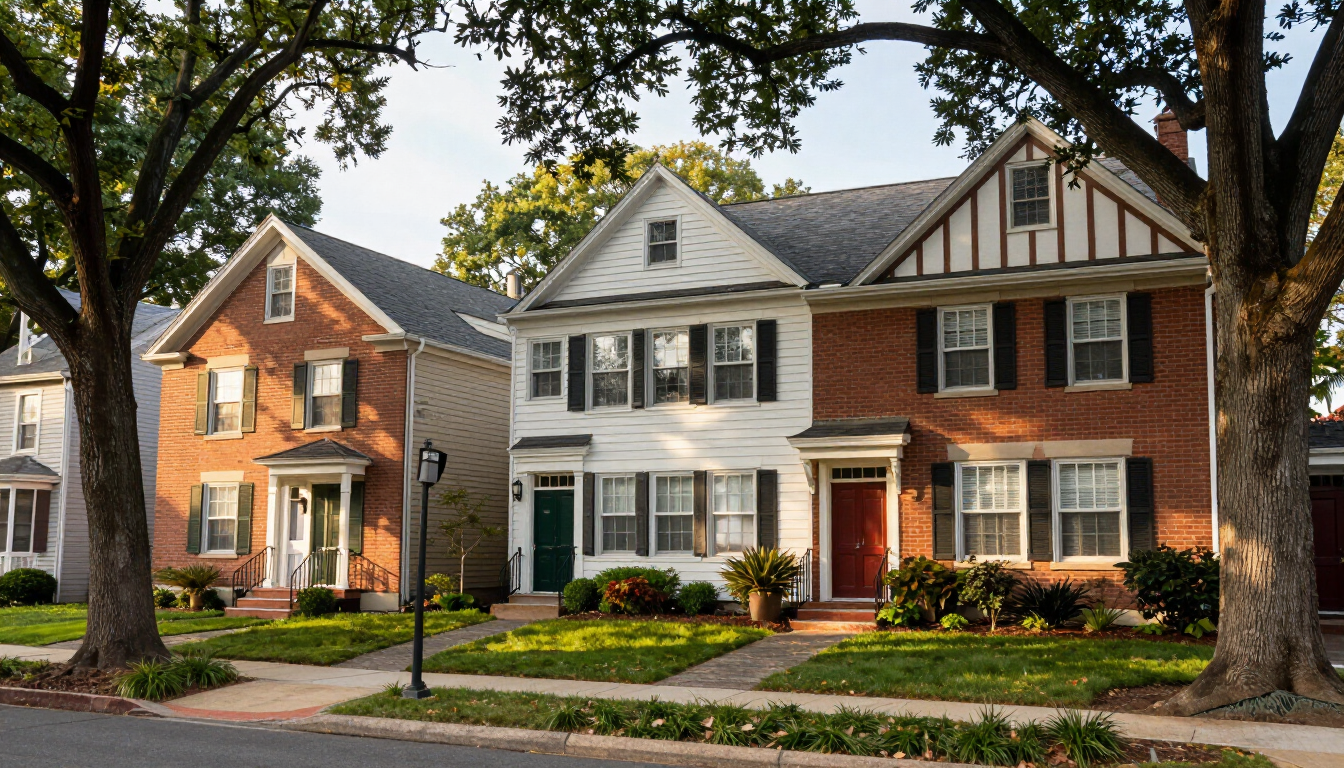
Everything Englewood homeowners need to know about painting — from East Hill Colonial estates and Tudor homes to Downtown brownstones, weather challenges, premium paint systems, and local color trends.
Introduction: Why Englewood Homes Need Specialized Painting Expertise
Englewood is one of Bergen County's most architecturally diverse and historically rich communities. From the stately Colonial and Tudor estates on East Hill to the century-old homes of the Nordhoff and Tenafly Road corridors, the city's housing stock spans nearly 150 years of American residential architecture. That diversity — combined with Bergen County's demanding four-season climate — makes painting an Englewood home a job that rewards specialized local expertise.
At Hudson Line Painters, we've worked on hundreds of Englewood properties across every neighborhood and home style. This pillar guide shares everything you need to know to plan your painting project — from choosing the right season and paint products to understanding costs and finding colors that suit your home's architectural character.
Jump to any section: Climate Challenges | Best Time to Paint | Architectural Styles | East Hill Homes | Downtown Englewood | How Weather Affects Paint | Cost Expectations | Choosing Colors | FAQs
Why Englewood Homes Require Different Paint Systems
Bergen County's climate presents a set of challenges that distinguish it from warmer, drier painting markets. Englewood specifically sits at an elevation that amplifies several weather effects:
- Humidity: Average relative humidity in Englewood runs 60–75%, peaking in July and August. High humidity slows paint drying and creates ideal conditions for mold and mildew growth on exterior surfaces — particularly on north-facing walls and under eaves.
- Freeze-thaw cycles: Englewood averages 15–20 significant freeze-thaw cycles per winter. Each cycle expands and contracts paint film, caulking, and substrates. Rigid conventional paints crack at joints; quality elastomeric paints and caulk flex instead.
- Architectural diversity: Colonial, Tudor, Victorian, brick, wood, fiber cement, stucco — each substrate and architectural style requires a different prep approach and paint chemistry. One-size-fits-all painting contractors frequently cut corners on Englewood's varied housing stock.
- Older housing stock: A significant portion of Englewood homes were built before 1978 and contain lead paint. EPA Lead-Safe Certified renovation practices are legally required and protect both occupants and workers.
Best Time to Paint in Bergen County
The ideal painting window in Englewood and Bergen County is mid-May through early September. During this period, temperatures are consistently above 50°F (the minimum for most latex paint application), humidity is manageable, and UV-driven drying is reliable.
Spring (mid-May to June): Excellent for exterior work. Temperatures are mild, rain is predictable (paint 24–48 hours after rain), and surfaces haven't accumulated summer grime. Our busiest booking period — schedule 4–6 weeks ahead.
Summer (July–August): Good for exterior, ideal for interior. Avoid painting in direct sun on hot days (above 90°F) — paint can dry too quickly on hot siding, creating lap marks. Schedule exterior work for early morning on the shaded side of the building.
Fall (September–October): Excellent weather window, often the most comfortable painting conditions. Book early — this is our second-busiest season. Stop exterior painting by mid-October in most years as overnight temps begin dropping below 50°F.
Winter (November–March): Interior painting only. Exterior work is not recommended — paints won't cure properly below 50°F, and moisture in wood substrates increases dramatically.
Colonial vs Tudor vs Modern Homes: Painting Approaches for Each
Englewood's architectural landscape is unusually varied for a Bergen County city. The three dominant styles — Colonial, Tudor, and modern renovations — each demand a different painting approach:
Colonial Homes
Colonials are the most common home style in Englewood. Typically featuring wood clapboard or vinyl siding, shutters, and symmetrical facades, they're relatively straightforward to paint but reward attention to trim detail. For wood clapboard Colonials, we recommend Sherwin-Williams Duration or Benjamin Moore Aura for the body, and Benjamin Moore Advance (alkyd-modified latex) for trim — its superior hardness makes it ideal for high-traffic doors and windows.
Tudor Homes
Tudor revival homes — concentrated on East Hill and along Palisade Avenue — feature half-timbered facades, stucco infill panels, and ornate decorative elements. These homes require specialty stucco primers and masonry coatings for the stucco sections, and careful color selection that honors the architectural vocabulary. The half-timber framing is often a painted or stained dark contrast color against lighter stucco.
Modern Renovations
Newer construction and extensively renovated homes in Englewood increasingly feature fiber cement siding (HardiePlank) and contemporary palettes. Fiber cement requires specific bonding primers and paint formulations for proper adhesion — we use Sherwin-Williams Emerald or Benjamin Moore Ultra Spec on these surfaces.
East Hill Luxury Homes: High-End Finishes and Premium Paint Systems
East Hill is Englewood's most prestigious residential neighborhood — a leafy, elevated enclave of large lots and architecturally significant homes that run from modest Colonials to multi-million-dollar estates. Homeowners here typically demand and receive a different level of service and finish quality than standard residential painting:
- Premium paint systems: Benjamin Moore Aura and Sherwin-Williams Emerald are the standard on East Hill — never mid-grade paints on these homes.
- Multi-coat application: We apply primer plus two topcoats on all East Hill exteriors — never a single-coat application.
- Color consultation: We provide formal color consultation including digital visualization and fan deck review before any work begins.
- Fine-finish interior work: Fine millwork, coffered ceilings, wainscoting, and custom built-ins require by-hand application and meticulous cutting-in — we don't spray interiors in occupied East Hill homes.
- Lead-safe protocols: Many East Hill estates predate 1978. We maintain EPA Lead-Safe Certification and follow all RRP protocols.
Our interior painting and exterior painting services for East Hill homes are priced to reflect the time, products, and expertise these properties require.
Downtown Englewood Homes: Older Architecture and Restoration Expertise
The residential neighborhoods adjacent to Downtown Englewood — along Demarest Avenue, Palisade Avenue, and Engle Street — contain some of Bergen County's oldest housing stock. Many of these homes were built between 1890 and 1940 and present restoration painting challenges not found in newer construction:
- Lead paint remediation: Pre-1978 homes require EPA Lead-Safe Certified contractors. We handle lead paint testing, containment, removal, and disposal per federal RRP Rule requirements.
- Historic plaster repair: Many older Downtown homes have plaster walls rather than drywall. Plaster repair before painting requires a different skill set than drywall patching — we have dedicated plasterers on our crew.
- Wood restoration: Original wood windows, doors, and trim on century-old homes require careful stripping, filling with epoxy wood consolidant, and hand application of alkyd-based primers before painting.
- Period-appropriate colors: For homeowners restoring their property's historic character, we consult Benjamin Moore's Historical Collection and Sherwin-Williams' Preservation Palette to identify period-accurate exterior color schemes.
How New Jersey Weather Affects Paint Longevity
Paint longevity on an Englewood home depends more on weather preparation than on brand choice alone. Here's how each weather factor affects your paint system:
- Humidity: High ambient humidity causes moisture to enter wood substrates, which eventually blisters paint from behind. Solution: test substrate moisture (should be below 15%) before painting, apply vapor-permeable primers, and ensure proper drainage away from the foundation.
- UV exposure: South- and west-facing facades receive the highest UV load, which breaks down pigment binders and causes fading. Solution: specify UV-stabilized paints (Benjamin Moore Aura's ColorLock) on high-exposure facades; use cool-roof-rated lighter colors that reflect rather than absorb solar energy.
- Freeze-thaw cycles: Paint film cracks at caulk joints as materials expand and contract. Solution: elastomeric caulk (rated to -40°F) at all joints; elastomeric topcoats on the most exposed surfaces.
- Mold and mildew: Bergen County's humid summers create ideal conditions for biological growth on exterior surfaces. Solution: clean with TSP or biocidal wash before painting; specify mildewcide-fortified primer and topcoat; ensure adequate ventilation at eaves.
A properly prepared and painted Englewood exterior using premium paints should last 8–12 years before the next full paint cycle is needed.
Cost Expectations: Interior and Exterior Painting in Englewood
Interior painting in Englewood typically runs $3–$5 per square foot of paintable surface area, including prep, primer, and two coats of premium paint. For a typical 2,000 sq ft Englewood Colonial, a full interior (walls, ceilings, trim) runs $4,500–$9,000 depending on the number of rooms, ceiling height, trim complexity, and condition of existing surfaces.
Exterior painting costs more due to prep time and multi-day scheduling: $3.50–$6 per square foot of exterior surface area. A typical 2,000 sq ft Colonial exterior runs $5,000–$10,000. Factors that increase exterior costs include: multi-story work requiring tall ladders or scaffolding, significant lead paint prep, wood rot repair, extensive caulking, or custom color with multiple accent colors.
All estimates are provided free of charge with no obligation. We provide itemized written estimates before any work begins so you know exactly what's included. Schedule your free estimate today.
Choosing Paint Colors for Englewood Homes
Color selection is the most personal decision in any painting project. For Englewood's diverse architecture, our color specialists recommend:
- Colonial homes: Classic white and off-white body colors with contrasting dark shutters (navy, hunter green, charcoal) are perennially popular. Benjamin Moore OC-17 (White Dove) body + BM HC-157 (Newburyport Blue) shutters is a combination we've used on dozens of Englewood Colonials.
- Tudor homes: Warm cream or soft yellow stucco with deep brown or near-black half-timber framing. Sherwin-Williams 7015 (Repose Gray) stucco + SW 6258 (Tricorn Black) timber framing is a sophisticated contemporary Tudor palette.
- East Hill luxury homes: Sophisticated neutrals — BM HC-172 (Revere Pewter), BM 2163-40 (Pale Oak), SW 7036 (Accessible Beige) — for interiors; classic whites and warm grays for exteriors.
- 2026 trending colors: Warm sage greens (BM 2143-30, SW 6168 Retreat), deep navy blues (SW 6244 Naval), and warm off-whites (BM OC-17) are leading the Bergen County market this season.
We offer complimentary color consultation with every estimate for Englewood painting projects.
Frequently Asked Questions About Painting Homes in Englewood
How long does exterior painting take for a typical Englewood Colonial?
Most Englewood Colonial exteriors take 5–8 days: Day 1 for power washing, Day 2 for scraping and prep, Days 3–4 for priming, Days 5–7 for body and trim coats, Day 8 for touch-ups and cleanup. Weather delays are common in Bergen County — we build buffer days into every exterior schedule.
Do I need to move out during interior painting?
No. We use zero-VOC and low-VOC paints that allow occupants to stay in the home during and after painting. We work room by room so you always have livable space. Furniture is covered in place or moved to the center of each room.
How do I know if my home has lead paint?
All homes built before 1978 are presumed to contain lead paint in New Jersey under the federal RRP Rule. We can perform a lead swab test before our estimate. If lead is present, we follow EPA-mandated containment and cleanup procedures at no additional hidden charge — lead-safe prep costs are included in our written estimates.
What paint brands do you use?
We specify Benjamin Moore Aura and Sherwin-Williams Duration/Emerald for premium projects, and Benjamin Moore Regal Select or Sherwin-Williams SuperPaint for value-grade work. We never use contractor-grade paints on residential projects.
Do you offer a warranty?
Yes. We offer a 3-year workmanship warranty on all exterior painting and a 2-year warranty on interior work. Paint manufacturer warranties (up to 15 years on premium paints) apply separately to the paint product itself.
Conclusion: Schedule Your Free Englewood Estimate Today
Hudson Line Painters has served Englewood homeowners since our founding. Our team is EPA Lead-Safe certified, fully licensed and insured in New Jersey, and rated 4.9★ on Google with 63+ reviews from Bergen and Hudson County homeowners.
Whether you need interior painting for an East Hill estate, exterior restoration for a Downtown Victorian, or a full repaint of a modern Colonial, we bring the expertise, products, and care your Englewood home deserves.
Schedule your free, no-obligation estimate today. We also cover all neighboring Bergen County communities including Teaneck, Hackensack, Fort Lee, and Cliffside Park.
Explore related guides: Exterior Painting and Bergen County Weather | East Hill Historic & Luxury Painting | Best Paint Colors for Englewood Homes | 2026 Painting Cost Guide for Englewood