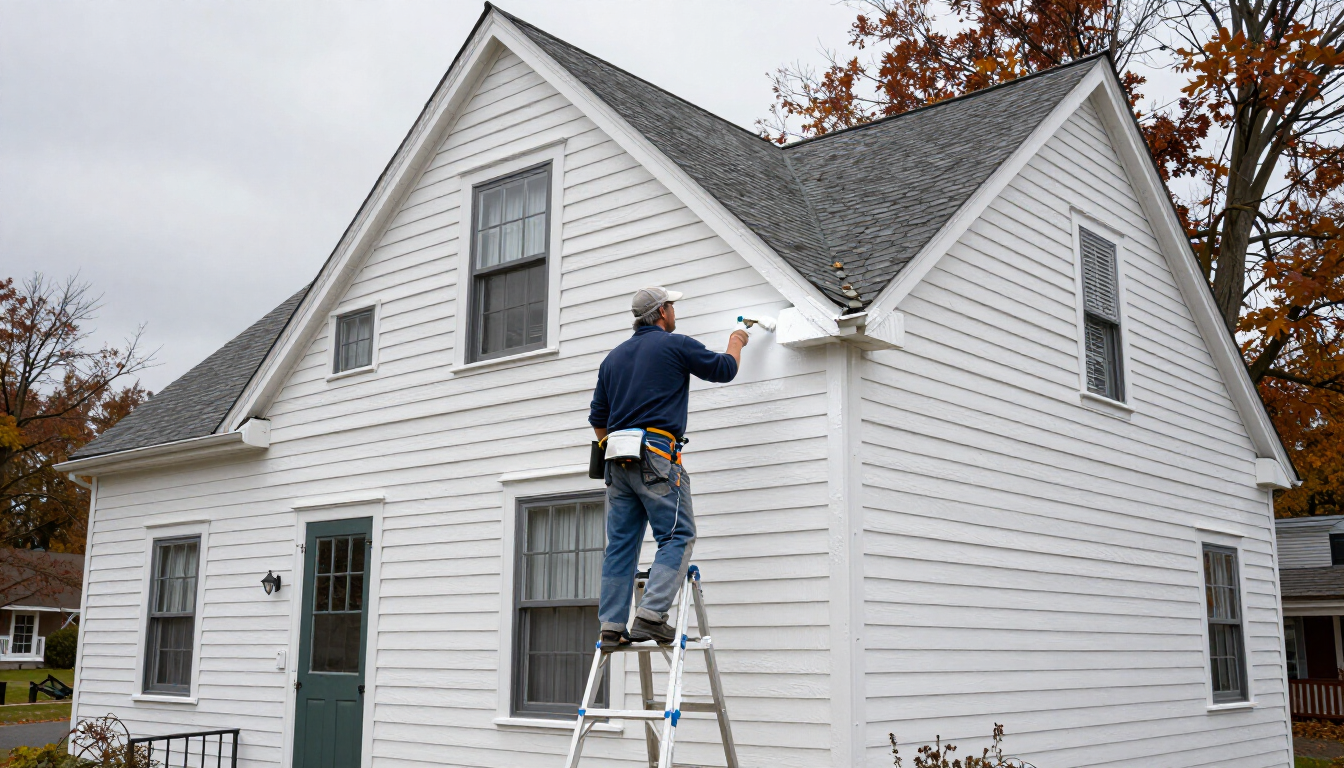
Bergen County's humid summers, brutal freeze-thaw winters, and UV-intense sun take a heavy toll on Englewood exterior paint. Here's how to choose the right coatings, prep, and timing to protect your home.
Introduction: Bergen County Weather and Your Home's Exterior Paint
Bergen County isn't a forgiving environment for exterior paint. Englewood homeowners deal with summer humidity that breeds mildew, winters that crack caulk and blister paint film, and south-facing facades that see more UV radiation than most of New Jersey. The good news: the right products and preparation can double or triple the lifespan of your exterior paint job — even in this demanding climate.
This guide covers the specific weather threats facing Englewood homes and the paint systems that handle them best. It's a companion to our Complete Homeowner's Guide to Painting Homes in Englewood.
Summer Humidity: Moisture Management and Mildew Prevention
Englewood's average summer relative humidity runs 65–80%. That moisture creates three distinct problems for exterior paint:
- Substrate moisture: Wood siding, trim, and fascia absorb atmospheric moisture during humid stretches. Painting over damp wood traps moisture behind the paint film, which eventually blisters and peels. We measure substrate moisture content before every application — wood must be below 15% to paint safely.
- Mold and mildew: Biological growth on north-facing walls, under overhangs, and in shaded areas is endemic in Bergen County's humid summers. It's the most common exterior paint defect we see on Englewood homes over 5 years old. Prevention: biocidal wash before painting, mildewcide-fortified primer, and topcoats with built-in antimicrobial additives.
- Application windows: Latex paint requires 4–6 hours of dry conditions before rain. We monitor Bergen County weather forecasts obsessively during exterior season and never paint within 24 hours of predicted precipitation.
Our preferred humid-climate exterior paint: Benjamin Moore Aura Exterior and Sherwin-Williams Duration — both include advanced mold-resistance technology and moisture-shedding topcoat chemistry.
Winter Freeze-Thaw Cycles: Paint Flexibility Is Critical
Englewood averages 15–20 significant freeze-thaw cycles per winter — days when temperatures cross 32°F in both directions. Each cycle:
- Expands and contracts wood, masonry, and metal substrates at different rates
- Stresses caulk joints, which are the first defense against water infiltration
- Works at paint film edges, particularly at trim-to-siding transitions and window perimeters
The solution: Elastomeric exterior systems. Benjamin Moore Aura has an elongation rating over 100% — meaning it stretches rather than cracks under thermal stress. Combined with elastomeric caulk rated to -40°F (we use Sherwin-Williams SuperFlex or Sashco Lexel), an elastomeric paint system dramatically outlasts conventional rigid paints in Bergen County winters.
On particularly exposed facades — south- and west-facing walls, wrap-around porches, gable ends — we recommend Sherwin-Williams Loxon Elastomeric Coating for maximum freeze-thaw protection.
UV Exposure: Preventing Color Fading and Film Degradation
Englewood's south- and west-facing facades receive a significant annual UV dose — enough to fade standard paints noticeably within 3–5 years. UV radiation does two things to paint: it bleaches pigments (fading) and it breaks down the binders that hold the paint film together (chalking, peeling).
When fading becomes visible, the protective chemistry in the paint is nearly exhausted — chalking and peeling typically follow within 1–2 years. Repainting before the topcoat fails completely is always less expensive than dealing with the substrate damage that follows.
UV-resistant paint recommendations:
- Benjamin Moore Aura Exterior — Color Lock technology significantly extends pigment life on UV-exposed facades. Available in full-depth colors with minimal fade.
- Sherwin-Williams Duration — 100% acrylic with LifeMaster 2000 technology for UV resistance. Excellent track record on Bergen County south-facing facades.
- Color choice matters: Dark colors absorb more UV energy and fade faster. If you love a dark navy or charcoal body color, invest in the premium paint — it's worth the extra $200–$400 in product cost to get 3–4 additional years of color life.
Moisture and Water Damage: Prevention Is Everything
Bergen County receives 46–50 inches of rainfall annually, distributed fairly evenly across the year. Combined with snowmelt in winter and spring, moisture management is the defining challenge of exterior painting in Englewood.
Critical moisture-prevention practices in our exterior process:
- Vapor-permeable primers: We use primers that allow moisture vapor to escape from wood substrates rather than trapping it under an impermeable barrier. Sherwin-Williams A-100 Exterior Primer and Benjamin Moore Fresh Start are both vapor-open and bond excellently to Englewood's predominant wood and masonry substrates.
- Comprehensive caulking: Every joint, every window perimeter, every trim-to-siding transition gets elastomeric caulk before topcoat. We use 3–4x the caulk volume of contractors who "touch up" only visibly failed joints.
- Drainage inspection: We flag gutters, downspouts, and grade issues that direct water toward the house during our pre-painting inspection — moisture getting into the wall from outside is the single biggest cause of paint failure we encounter.
Wood Siding Maintenance: Prep, Staining, and Protective Coatings
Wood clapboard and shake siding are common on older Englewood homes, particularly in the Downtown corridor and on East Hill Colonial estates. Wood requires the most preparation of any siding material:
- Power washing: Removes mold, mildew, chalking, and surface dirt. 1,800–2,500 PSI with appropriate nozzle angle — too much pressure raises wood grain and damages paint adhesion.
- Scraping and sanding: All loose, peeling, or cracked paint is scraped off and sanded smooth. On pre-1978 homes, this is done under EPA Lead-Safe containment.
- Wood consolidation: Soft or slightly rotted wood sections that don't require full replacement get treated with LiquidWood epoxy consolidant to stabilize before priming.
- Spot priming: All bare wood and repaired sections receive a penetrating oil-based primer before the acrylic topcoat.
- Two topcoats: Never one coat on previously bare or extensively prepped wood — always a primer plus two finish coats for proper film build and longevity.
Stucco Painting: Specialized Primers and Breathable Finishes
Stucco is common on Englewood's Tudor revival and Mediterranean-influenced homes. Painting stucco requires a different approach than wood or vinyl:
- Alkalinity treatment: Fresh or recently repaired stucco has a high pH that can cause adhesion failure with standard primers. We apply Sherwin-Williams Loxon Conditioner — an alkali-resistant masonry primer — before topcoating.
- Breathable topcoats: Stucco absorbs and releases moisture seasonally. Paint systems that don't allow moisture vapor transmission trap water inside the stucco and cause delamination. We use elastomeric masonry coatings that remain vapor-open while shedding liquid water.
- Crack repair: Stucco cracks are common in freeze-thaw climates. We fill hairline cracks with elastomeric caulk and larger cracks with stucco patching compound before painting.
Fiber Cement Siding: Bonding Primers and Durability
HardiePlank and other fiber cement sidings are increasingly common on renovated and new construction homes in Englewood. Fiber cement is dimensionally stable and resists rot and insects — but it requires specific paint system attention:
- Bonding primer: Fiber cement's smooth factory coating requires a bonding primer for proper adhesion. We use Benjamin Moore Fresh Start High Build or Sherwin-Williams Prime & Seal on fiber cement.
- 100% acrylic topcoats: Fiber cement manufacturers require 100% acrylic paints and will void their warranty with oil-based or alkyd products.
- Edge sealing: The cut ends of fiber cement boards are the most vulnerable to moisture absorption. All field cuts get sealed with an end-grain sealer before installation and painted with extra attention at edges.
Brick Trim: Masonry Coatings and Color Preservation
Many Englewood homes feature brick foundations, chimneys, window surrounds, and decorative trim. Painting brick is a long-term commitment — once painted, it's very difficult to remove the coating — so we recommend careful consideration before painting brick:
- Masonry consolidation: Spalling or deteriorating brick mortar must be repointed before painting. We refer specialized masonry repair to licensed masons when needed.
- Masonry primer: Sherwin-Williams Loxon or Benjamin Moore Masonry Waterproofer provides a penetrating primer coat that blocks efflorescence and provides a bond coat for the topcoat.
- Breathable topcoats: Brick must be able to breathe — never use non-porous elastomeric coatings on brick that is in contact with soil or receives direct precipitation.
Premium Exterior Coatings: Our Top Recommendations for Englewood Homes
Based on 10+ years of Bergen County exterior painting experience, here are our top product recommendations by surface type:
- Wood siding (primary body): Sherwin-Williams Duration or Benjamin Moore Aura Exterior — both rated for 10+ year performance in Northern NJ climate
- Trim and doors: Benjamin Moore Advance (alkyd-modified latex) for superior hardness and flow on trim; Benjamin Moore Aura Grand Entrance for front doors
- Masonry and stucco: Sherwin-Williams Loxon Elastomeric over Loxon Conditioner primer
- Fiber cement: Benjamin Moore Aura Exterior with Fresh Start bonding primer
- Metal (railings, gutters, doors): Sherwin-Williams Pro Industrial Alkyd DTM after zinc-rich primer
- Maximum exposure or elastomeric requirement: Sherwin-Williams Loxon Elastomeric Coating — rated for 100%+ elongation and direct water contact
Local Geography: How the Palisades Affect Englewood Weather Patterns
Englewood's position on and near the Palisade ridge introduces weather effects that affect paint longevity on specific facades:
- Elevated wind exposure: Properties on the ridge and on East Hill receive stronger prevailing winds than properties in the valley. Wind accelerates paint drying (creating lap marks if application isn't managed) and stresses caulk joints over time. Elastomeric systems are especially important here.
- Temperature inversions: The valley areas near the Hackensack River experience more frequent frost and condensation than hilltop properties — important for scheduling and for moisture management during painting.
- Sun angle variation: The ridge's north-south orientation means west-facing facades get maximum afternoon sun exposure, while east-facing facades are often in afternoon shade — affecting drying windows and UV load significantly.
Conclusion: Protect Your Englewood Home with the Right Exterior Paint System
Bergen County's climate demands more than a fresh coat of paint — it demands a complete, weather-appropriate paint system from substrate prep through premium topcoat. Hudson Line Painters has the Bergen County experience, EPA certifications, and premium product partnerships to protect your Englewood home for the long term.
Schedule your free exterior painting estimate today. Learn more about our work in Englewood at our Englewood location page, or read our complete guide: The Complete Homeowner's Guide to Painting Homes in Englewood, NJ.