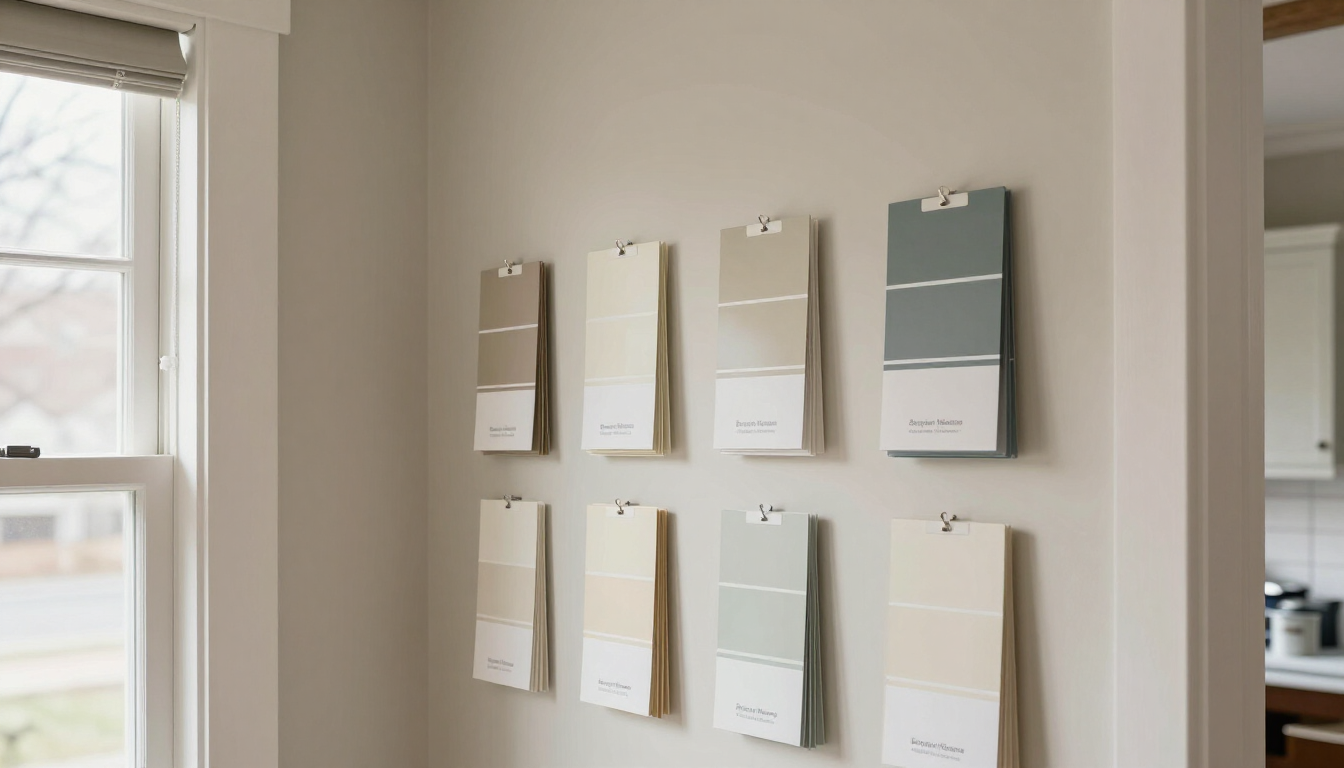
From East Hill Colonial estates to Downtown Victorians and modern renovations on Grand Avenue, the right paint color transforms an Englewood home. Expert guidance on palettes, 2026 trends, and neighborhood-specific recommendations.
Introduction: Color Selection for Englewood's Diverse Architecture
Color is the most personal and highest-stakes decision in any painting project — and in Englewood, the range of architectural styles and neighborhood contexts makes thoughtful color selection more important than in most Bergen County communities. East Hill's Colonial estates, the Tudor revivals along Palisade Avenue, the Victorian brownstones near Downtown, and the modern renovations on Grand Avenue all demand different approaches to color.
Hudson Line Painters offers complimentary color consultation with every free estimate for Englewood painting projects. This guide shares the frameworks our color specialists use across Englewood's diverse housing stock.
Looking for more? Read our Complete Homeowner's Guide to Painting Homes in Englewood for a broader overview of painting in Bergen County.
Colonials: Classic Palettes, Trim Colors, and Interior Schemes
Colonial homes are the most prevalent style in Englewood — and they're also the most forgiving for exterior color selection. The symmetrical, restrained architecture of Colonial homes accommodates a wide range of body colors while always looking appropriate with white or off-white trim and dark shutters.
Exterior Colonial Color Palettes
- Classic white + navy shutters: Benjamin Moore OC-17 (White Dove) body + BM HC-157 (Newburyport Blue) shutters + BM 2133-10 (Black Beauty) door. The most requested combination on Englewood Colonials — timeless, neighborhood-appropriate, excellent resale appeal.
- Warm gray + dark shutters: SW 7015 (Repose Gray) body + SW 6258 (Tricorn Black) shutters + SW 7012 (Creamy) trim. Contemporary and sophisticated — popular on larger Colonial estates on East Hill.
- Sage green + white: BM HC-116 (Avocado) body + BM OC-17 (White Dove) trim + BM 2133-10 (Black Beauty) door. The 2026 trend leader — nature-inspired, neighborhood-appropriate, and notably different from the all-gray Colonial exteriors of the past decade.
Interior Colonial Color Schemes
Colonial interiors typically respond best to color approaches that respect the home's formal character while feeling warm and livable:
- Formal dining room: A slightly deeper neutral like BM HC-172 (Revere Pewter) or BM 2163-10 (Hale Navy) on all four walls, with white trim and ceiling, creates a classic, enveloping dining room atmosphere.
- Living areas: BM OC-17 (White Dove) or BM 2163-40 (Pale Oak) with white trim for bright, airy rooms that work with virtually any furniture.
- Primary bedrooms: Soft, muted tones — BM HC-161 (Pale Smoke), BM 2163-40 (Pale Oak), or SW 7015 (Repose Gray) — for a calm, restful environment.
Tudor Homes: Warm Earth Tones, Accent Colors, and Exterior Combinations
Tudor revival homes in Englewood — concentrated along East Palisade Avenue and on East Hill — have a specific architectural vocabulary that rewards thoughtful color:
- Half-timber contrast: The half-timber framing should read as the darkest element on the facade — near-black (SW 6258 Tricorn Black) or deep brown (BM 2112-10 Brown Sugar) are both correct historically and visually effective against lighter stucco.
- Stucco body: Warm cream tones (BM OC-45 Swiss Coffee, SW 7012 Creamy) complement the dark timber framing naturally. Cool grays (SW 7015 Repose Gray) create a more contemporary interpretation that works on 1920s Tudor homes without looking anachronistic.
- Accent details: Tudor homes frequently have ornate ironwork, carved stone, and decorative bargeboards. These are best left in their natural material color or treated with a dark, unobtrusive stain rather than a contrasting paint color.
- Interior warm palettes: The dark timber framing and leaded glass of Tudor interiors pair naturally with warm, rich interior colors — BM HC-45 (Lancaster Whitehouse), BM 2155-10 (Forest Green), BM 2067-10 (Gentleman's Gray) for library paneling.
Brick Homes: Colors That Complement Brick and Exterior Palettes
Many Englewood homes feature brick facades, brick foundations, or brick accents. Selecting complementary colors for trim and accents when brick is part of the facade requires understanding the brick's undertone:
- Red-orange brick: Warm brick tones pair with warm whites (BM OC-17 White Dove), warm grays (BM HC-172 Revere Pewter), and warm greens (SW 6171 Artichoke). Avoid cool grays — they clash with the warm brick undertone.
- Brown-purple brick: Deeper brick tones with purple or brown undertones work with cooler whites (BM OC-65 Chantilly Lace), soft greens, and deep navies. SW 6244 (Naval) trim with this brick is a beautiful combination.
- Painted brick: If you're painting brick that was previously unpainted, this is a permanent decision requiring careful thought. Popular painted-brick colors include crisp white (BM OC-65), warm white (BM OC-17), and soft gray (BM HC-168 Gray Owl). Apply a breathable masonry primer first — never paint brick with non-permeable coatings.
Modern Renovations: Contemporary Color Schemes, Bold Accents, and Minimalist Palettes
Englewood's modern renovations and new construction homes have significant more flexibility in color selection — they're not constrained by historic precedent or architectural vocabulary that demands a specific palette:
- Monochromatic exterior: A single color family from light to dark — BM OC-17 (White Dove) body, BM HC-168 (Gray Owl) trim, BM 2133-10 (Black Beauty) door — creates a sophisticated, contemporary single-family look.
- Dark-body contemporary: Deep charcoal (SW 7069 Iron Ore) or black-iron (BM 2133-10) body with white or warm white trim for a bold, architecturally modern exterior.
- Interior minimalist: All-white interiors — BM OC-65 (Chantilly Lace) walls and ceiling, BM OC-17 (White Dove) trim — with one bold accent wall in BM 2067-10 (Gentleman's Gray) or BM 2062-10 (Pacific Ocean) for visual interest.
Luxury Homes: Sophisticated Neutrals and High-End Color Combinations
For Englewood's luxury homes — particularly on East Hill — color selection skews toward sophisticated restraint. The goal is a palette that feels expensive and timeless without being boring:
- Warm neutral interiors: BM 2163-40 (Pale Oak) walls + BM OC-17 (White Dove) trim + BM HC-172 (Revere Pewter) on a single accent wall. Works with every style of luxury furnishing — a perennial best-seller on East Hill.
- Library and study: Deep, enveloping colors in home libraries and studies — BM 2067-10 (Gentleman's Gray), BM 2062-20 (Deep Ocean), BM 2155-10 (Forest Green) in high-gloss for paneled walls — create rooms that feel serious, curated, and expensive.
- Primary suites: Soft, barely-there colors in primary bedrooms — BM 2169-70 (Morning Dew), BM 1558 (Dune White), BM HC-161 (Pale Smoke) — for a serene, spa-like environment.
Historic Districts: Period-Appropriate Colors and Design Guidelines
Portions of Englewood near the Downtown core and in the historic Dyckhman Street corridor may be subject to local design guidelines or historic preservation review. Even outside formal review areas, period-appropriate color selection on historic homes is good stewardship and protects property values:
- Pre-1920 homes: Benjamin Moore's Historical Collection and Sherwin-Williams' Preservation Palette both offer period-accurate exterior colors validated against historic American architectural documentation.
- Victorian era (1880–1910): Earthy body tones (olive, ochre, terracotta, deep red), cream or buff trim, and darker accent colors on decorative elements are all historically accurate for this period.
- Colonial revival (1910–1940): White, cream, or soft yellow body colors with dark shutters (black, navy, hunter green, or deep red) are characteristic of this period's exterior color sensibility.
Trending Neutral Colors for 2026: Timeless Options for Englewood Homes
2026 color trends in Bergen County are moving away from the cool gray dominance of the 2015–2023 period toward warmer, more nature-connected tones:
- Warm sage greens: BM 2143-30 (Dried Thyme), BM HC-116 (Avocado), SW 6168 (Retreat) — nature-inspired body colors making a strong showing on Colonials and Tudors alike
- Warm off-whites: BM OC-17 (White Dove), SW 7012 (Creamy), BM OC-45 (Swiss Coffee) — a return to warmth after years of cool-white dominance
- Warm greiges: BM 2163-40 (Pale Oak), BM HC-172 (Revere Pewter), SW 7536 (Accessible Beige) — the workhorses of Bergen County interior painting, perennially popular and in strong demand in 2026
- Deep navy: SW 6244 (Naval), BM 2062-10 (Pacific Ocean), BM HC-157 (Newburyport Blue) — strong exterior body colors for Colonials wanting to make a bold statement
Colors That Improve Resale Value: Buyer-Friendly Selections
If you're painting with an eye toward resale, research consistently shows that neutral, buyer-friendly palettes outperform bold or unusual color choices in terms of time on market and selling price:
- Interior: Warm whites and soft greiges remain the best universal choices. BM OC-17 (White Dove), BM 2163-40 (Pale Oak), SW 7015 (Repose Gray). Avoid very dark, very saturated, or very unusual colors in rooms that will be shown.
- Exterior: Classic white or soft gray bodies with contrasting trim and shutters consistently appeal to the broadest range of buyers in the Englewood market. Sage green is gaining resale-friendly status as its popularity grows.
- Front door: A bold, welcoming front door color — Benjamin Moore Aura Grand Entrance in BM 2062-10 (Pacific Ocean), BM 2067-10 (Gentleman's Gray), or BM 2086-20 (Brick Red) — adds curb appeal without affecting the neutrality of the main color scheme.
Neighborhood-Specific Color Recommendations
East Hill
East Hill's large-lot Colonial and Tudor estates respond to sophisticated, restrained palettes that honor the neighborhood's historic architectural character. Avoid highly saturated or unconventional colors — the neighborhood's visual cohesion is part of its property value. Our top picks: BM OC-17 (White Dove) + BM HC-157 (Newburyport Blue) for Colonials; SW 7015 (Repose Gray) + SW 6258 (Tricorn Black) for Tudors.
Downtown Englewood
The residential areas adjacent to Downtown feature older, more eclectic architecture that accepts both period-appropriate and contemporary color approaches. Victorian-era homes support multi-color "Painted Lady" schemes; early 20th century row houses look excellent in warm off-white with contrasting trim.
Grand Avenue Corridor
The residential neighborhoods along and near Grand Avenue include a mix of mid-century and modern construction that responds to contemporary palettes — clean whites, deep charcoals, and sage greens all work in this context.
East Palisade Avenue
The Tudor revival homes clustered along East Palisade Avenue are best served by warm, historically-rooted palettes that honor the architectural vocabulary — warm cream or soft gray stucco with dark timber framing and restrained accent colors.
Free Color Consultation with Hudson Line Painters
Color selection is complimentary with every free estimate we provide for Englewood and Bergen County painting projects. Our color consultation includes in-home review of your existing finishes, digital visualization of exterior options, and large paint sample boards applied to your actual walls so you can see colors in your specific light before committing.
Related posts: Complete Guide to Painting in Englewood | East Hill Luxury & Historic Painting | 2026 Painting Cost Guide