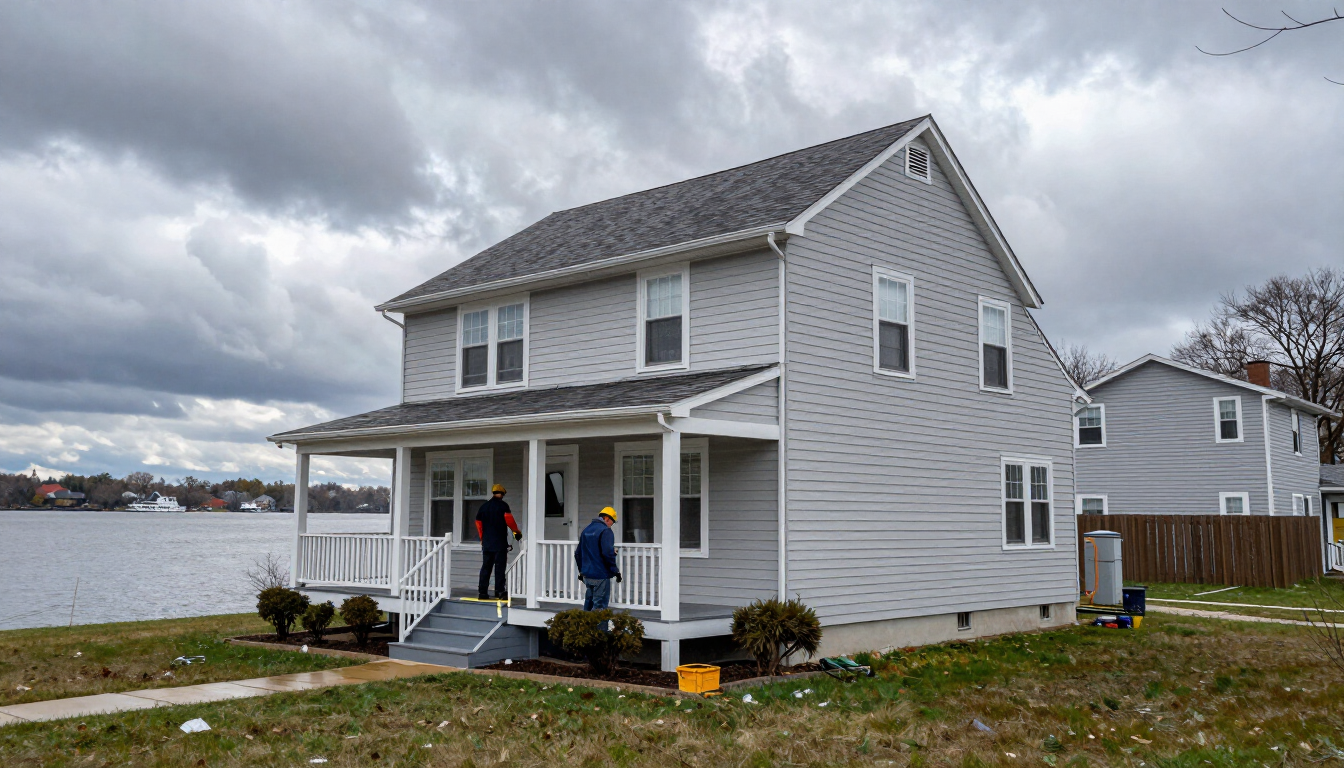
Living on the Hudson River in Edgewater means your home's exterior faces constant moisture, wind, and salt air. Learn which premium paint systems handle waterfront conditions and how to maximize exterior paint lifespan.
Introduction: Unique Challenges of Waterfront Painting in Edgewater
If you own property in Edgewater, New Jersey, you've made your home in one of the Hudson Valley's most desirable waterfront communities — and one of the most demanding environments for exterior paint. Properties along River Road, The Waterfront, and throughout Edgewater's riverside corridors face a combination of moisture, wind, UV exposure, freeze-thaw cycling, and salt air that accelerates paint degradation significantly faster than inland Bergen County locations.
The result: homeowners who use standard paint systems see exterior paint failing in 3–5 years. Homeowners who use properly specified premium systems with correct surface preparation can expect 10–15 years of performance. The difference isn't luck — it's understanding how Edgewater's waterfront environment attacks exterior paint and choosing the right system to resist it.
At Hudson Line Painters, we specialize in exterior painting for Edgewater properties. This guide explains exactly what your home's exterior is up against and what premium paint systems do best.
Moisture and Humidity from the Hudson River
The Hudson River generates persistent ambient moisture throughout the year, but the challenge is most acute during the seasonal transitions of spring and fall. When warmer air meets cooler water surfaces, morning fog and heavy dew form on every exterior surface — siding, trim, window frames, doors, and decks. On properties within a few hundred feet of the river, this moisture cycle occurs daily for months.
What this means for your exterior paint:
- Mildew and algae: Constant moisture cycling creates ideal conditions for mildew and algae growth on north-facing and shaded surfaces. Paint that isn't mildew-resistant will show discoloration within two seasons.
- Blistering and peeling: Moisture infiltrates micro-cracks in aging paint films, then expands when heated by sunlight — creating blisters that eventually rupture and peel. On Edgewater waterfront properties, this process happens faster and more aggressively than on inland homes.
- Paint softening: Prolonged moisture exposure softens paint films, reducing adhesion and making surfaces more susceptible to impact damage from river-driven debris and wind-driven rain.
Solution: Vapor-permeable primers (such as Benjamin Moore Fresh Start or Sherwin-Williams Loxon) allow moisture to escape from the substrate without blistering the topcoat. Combined with mildew-resistant topcoats, these systems dramatically extend paint life on Edgewater waterfront properties.
Wind Exposure and Paint Degradation
The Hudson River corridor acts as a natural wind channel. Properties in Edgewater — particularly high-rises, elevated terraces, and units with unobstructed river views — experience sustained wind exposure that accelerates paint degradation through two primary mechanisms:
UV Damage Acceleration
Wind-cleared air near the river provides less UV filtering than the atmospheric haze common inland. South and west-facing facades on Edgewater properties receive higher effective UV doses than identical inland properties, causing faster color fading and paint film oxidation.
Wind-Driven Rain Impact
Wind-driven rain acts almost like a sandblaster on exterior paint over time — the combination of impact force and moisture penetration erodes paint films faster than still-water rain. This is particularly evident on River Road buildings and elevated townhome terraces where wind has an unobstructed approach.
Solution: Paint systems with high flexibility (elasticity rating) resist cracking under the thermal stress and substrate movement that wind amplifies. Sherwin-Williams Duration's PermaLast technology and Benjamin Moore Aura's flexible film maintain adhesion and film integrity far better than budget or mid-grade systems in Edgewater's wind-exposed environment.
Freeze-Thaw Cycles in Bergen County Winters
Bergen County winters deliver a particularly damaging pattern for exterior paint: temperatures oscillate repeatedly across the 32°F freezing threshold — sometimes multiple times per day in early spring and late fall. On a waterfront property in Edgewater, where absorbed moisture content in exterior substrates is already higher than inland, the freeze-thaw mechanism is especially destructive:
- Moisture absorbed into wood siding, caulk joints, and paint films expands when it freezes
- This expansion creates micro-fractures in paint films and substrates
- When temperatures rise, water infiltrates the expanded cracks
- The next freeze cycle worsens the fractures
- After 3–5 seasons, caulk joints fail, paint peels, and wood begins to deteriorate
Solution: 100% acrylic paint systems remain flexible at low temperatures, accommodating substrate movement without cracking. Elastomeric systems provide even greater flexibility for stucco and masonry applications. Annual caulk inspection and replacement of failed joints prevents moisture infiltration that drives freeze-thaw damage.
Salt Air and Corrosion on Edgewater Properties
While Edgewater is a freshwater river environment rather than ocean-front, the Hudson River does carry trace salt content — particularly during dry summer periods when tidal saltwater influence from New York Harbor extends northward. Combined with the mineral content in river fog and spray, Edgewater properties experience mild salt air exposure that affects:
- Metal trim, railings, and fasteners: Accelerated oxidation and corrosion on unprotected metals. Galvanized or stainless hardware is essential on exterior applications; ferrous metals require rust-inhibitive primer before topcoat.
- Paint adhesion: Salt deposits on exterior surfaces interfere with paint adhesion if not removed before repainting. Thorough pressure washing before any exterior project is mandatory on Edgewater properties.
- Window and door frames: Aluminum frames on older Edgewater buildings oxidize faster in salt-influenced air. Proper primer selection for aluminum substrates prevents adhesion failure.
Regular Maintenance Requirements for Edgewater Waterfront Properties
Waterfront properties require a more proactive maintenance schedule than inland homes:
- Annual inspection: Every spring, inspect all exterior caulk joints (especially around windows, doors, and utility penetrations), check for signs of mildew growth on north-facing and shaded surfaces, and look for early signs of paint film failure (chalking, fading, or micro-cracking).
- Caulk replacement: Caulk joints on waterfront properties fail faster than inland. Plan to replace failed caulk every 3–5 years rather than waiting for full paint system failure.
- Mildew treatment: If mildew appears on exterior surfaces, treat with dilute bleach solution (1:3 bleach to water) before it penetrates the paint film. Pressure wash to remove deposits.
- Touch-up painting: Address any bare wood, cracked caulk, or peeling paint areas promptly. Small failures on waterfront properties escalate faster than on inland homes.
Why Premium Paint Systems Are Essential on Edgewater Waterfront Homes
There is no category of property where the premium vs. budget paint decision matters more than on a Hudson River waterfront home. A $35-per-gallon mid-grade exterior paint on an Edgewater property will fail in 3–5 years. Benjamin Moore Aura or Sherwin-Williams Duration will deliver 10–15 years. The labor cost of painting is the same either way — the premium paint pays for itself multiple times over in deferred repainting costs.
Our standard specifications for Edgewater exterior projects:
- Benjamin Moore Aura Exterior: Color Lock technology for fade resistance; 100% acrylic formulation for flexibility and mildew resistance; exceptional hide for coverage over aged surfaces.
- Sherwin-Williams Duration Exterior: PermaLast technology for superior film build; outstanding mold and mildew resistance; excellent wind-driven rain resistance for exposed Edgewater elevations.
- Elastomeric masonry systems: For stucco, brick, and block construction — provides crack-bridging capability and a moisture-resistant membrane over the substrate.
Proper Surface Preparation for Waterfront Homes
Paint quality matters nothing if applied over poorly prepared surfaces. For Edgewater waterfront properties, our standard prep process includes:
- Pressure washing: Thorough cleaning to remove salt deposits, mildew, algae, chalk, and loose paint. Mandatory before any Edgewater exterior project.
- Mildew treatment: Any areas showing mildew or algae receive bleach solution treatment before washing.
- Caulk inspection and replacement: All exterior caulk joints assessed; failed or cracked caulk replaced with premium paintable siliconized caulk.
- Wood rot assessment: All wood trim, sill areas, and siding inspected for soft, punky wood indicating rot. Affected wood replaced or consolidated before painting.
- Moisture barrier primer: Vapor-permeable primer applied to all bare wood and any areas with documented moisture history.
- Spot prime: All bare areas spot-primed before full topcoat application.
Long-Term Investment Protection
Edgewater waterfront properties represent significant financial investment. A properly specified exterior paint system protects that investment by:
- Preventing moisture infiltration that causes structural decay
- Maintaining curb appeal and resale value in a competitive river corridor real estate market
- Reducing the frequency of repainting — premium systems make the per-year cost of protection lower than budget systems that fail every 3–4 years
- Identifying underlying issues (wood rot, caulk failure, moisture intrusion) before they become expensive structural repairs
Comparing Waterfront vs. Inland Painting Needs
To put Edgewater's requirements in perspective:
- Paint lifespan: 10–15 years with premium systems vs. 8–12 years in typical inland Bergen County applications
- Prep time: 20–30% more prep time required for waterfront properties due to thorough washing, caulk work, and moisture assessment
- Product cost: Premium paint systems specified on every Edgewater exterior project; budget products not appropriate
- Maintenance frequency: Annual inspection recommended vs. every 2–3 years for typical inland properties
For color selection guidance specifically for Edgewater's waterfront properties, see our waterfront paint color guide. For full cost information, see our 2026 Edgewater painting cost guide. And for the complete guide to painting in Edgewater, visit our Edgewater painting pillar page.
Schedule Your Free Waterfront Painting Estimate
Hudson Line Painters specializes in exterior painting for Edgewater waterfront properties. We understand the unique requirements of river corridor homes and condos, and we specify paint systems that perform for 10–15 years in this demanding environment.
Contact us today for a free exterior painting estimate — we serve River Road, The Waterfront, North Edgewater, Edgewater Glen, Edgewater Beach, and the Borough Hall area.