A guide to drywall repair and wall preparation before painting in Moonachie, NJ. Covers nail holes, settlement cracks, damaged drywall, previous repairs, water-stained drywall after the moisture source is corrected, skim coating, sanding, and spot priming — and why the finished paint is only as good as the surface underneath it. Focused exclusively on Moonachie.
If you are searching for drywall repair Moonachie NJ homeowners, landlords, and property managers can rely on, this guide walks through what drywall repair and wall preparation actually involve before painting in Moonachie. The finished paint is only as good as the surface underneath it — painting over damaged drywall, untreated stains, or unprimed repairs hides the problem only briefly. This guide explains the prep process so you understand why it matters and how to compare estimates. It stays focused exclusively on Moonachie.
For our full Moonachie service coverage, visit our painters in Moonachie, NJ page. For the dedicated drywall service process, see drywall repair in Moonachie. To request a free, no-obligation on-site estimate, contact us here.
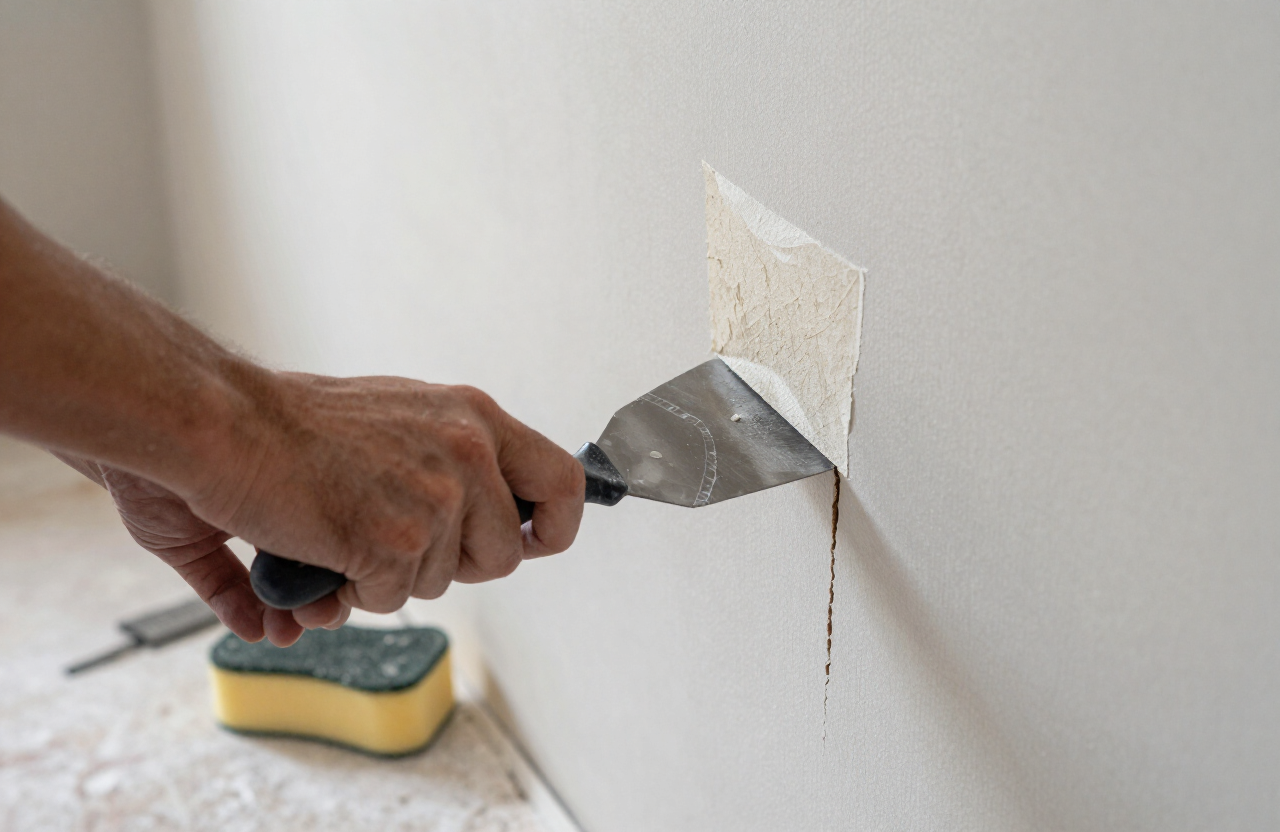
Why Drywall Repair Matters Before Painting
Interior painting is only as good as the surface underneath it. A fresh coat of paint over a cracked, stained, or damaged wall looks good for a short time — but as the wall continues to move, the stain bleeds through, or the damaged substrate flexes, the new coating fails with it. That is why drywall repair and wall preparation come before painting, not after. Proper prep is the step that protects your finish investment and extends the life of the paint job.
On Moonachie homes and multifamily properties — especially older ones with plaster walls, settling cracks, and decades of previous coatings — drywall and wall preparation is often the most important step in the project. Skipping it to save time or money leads to premature paint failure that costs more to fix than doing it right the first time.
Nail Holes, Anchor Holes & Scuffs
The most common drywall repairs before painting are the small ones — nail holes, anchor holes, and scuffs left by previous occupants. These are straightforward to repair: we fill each hole with spackle or joint compound, scrape off the excess, sand smooth, and prime the spot so the repair blends with the surrounding wall. On multifamily turnovers in Moonachie, this is standard prep between tenants.
While small individually, dozens of nail holes and scuffs across a room add up. Properly patching and priming each one ensures the finish coat goes on a uniform surface rather than a wall dotted with visible repairs.
Settlement Cracks
Settlement cracks are common in Moonachie homes, especially older properties. As a house settles over time, hairline cracks appear in drywall and plaster — often at seams, corners, and above doorways. Simply painting over a hairline crack hides it only briefly; as the wall continues to settle, the new coating cracks with it.
Proper crack repair involves:
- Raking — widening the crack slightly with a utility knife so filler bonds into the gap rather than sitting on the surface.
- Filling — pressing joint compound into the raked crack and feathering it out beyond the crack edges.
- Sanding — smoothing the repair flush with the surrounding wall once dry.
- Priming — priming the repaired area so the finish coat adheres evenly and the repair does not telegraph through.
For wider or recurring cracks, we may use mesh or paper tape embedded in joint compound to reinforce the repair against future movement.
Damaged Drywall & Previous Repairs
Larger damage — impact holes, water-damaged sections, or areas where previous repairs were done poorly — needs more than a surface patch. We assess the extent of the damage, cut out and replace compromised drywall sections where needed, secure and tape the seams, and build up joint compound in layers to a smooth, uniform surface before priming and painting.
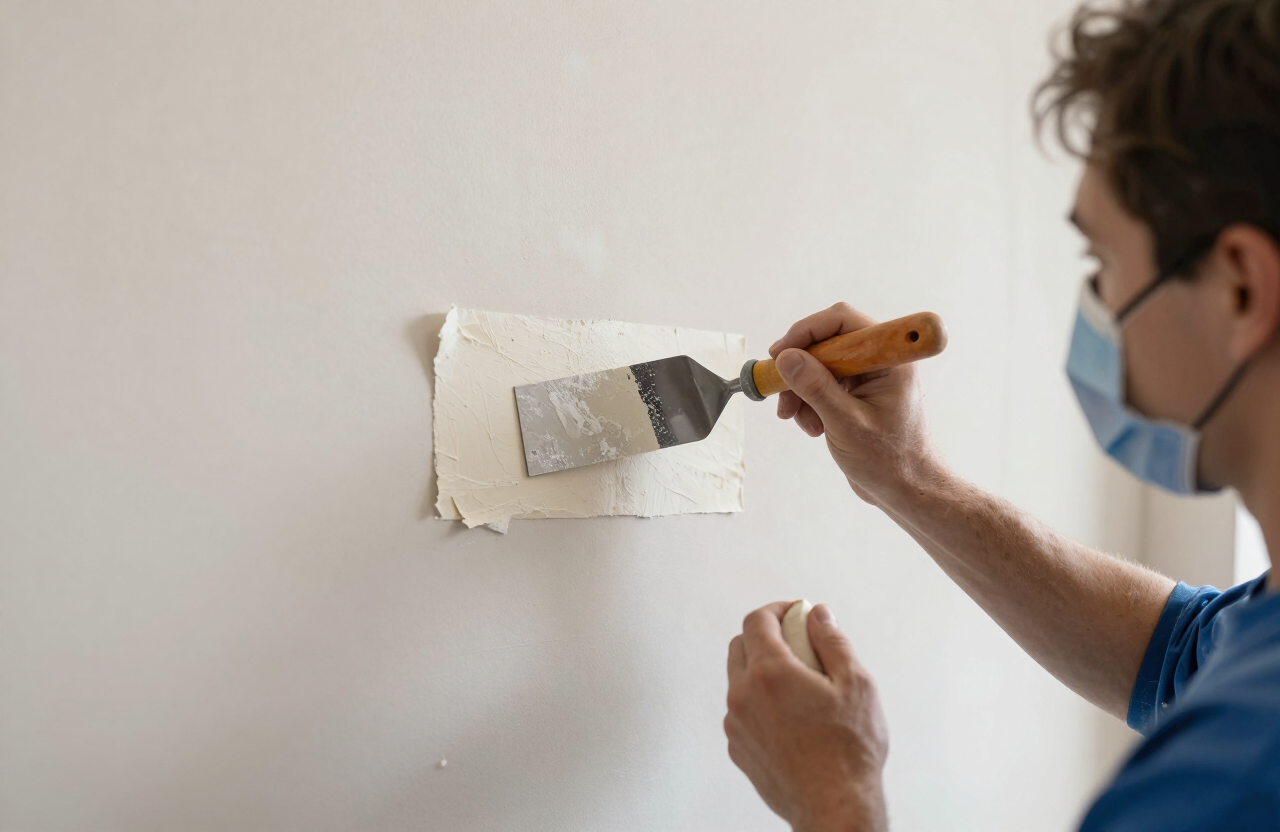
Previous repairs that were done poorly — visible patches, uneven texture, mismatched compound — are evaluated and blended so old patches do not show through the new finish. The goal is a wall that looks uniform once painted, not a wall that telegraphs every repair that came before.
Water-Stained Drywall
Water stains on drywall or plaster are common after a leak, roof issue, or plumbing problem. Painting over a water stain without sealing it first almost always results in the stain bleeding through the new finish — sometimes immediately, sometimes over weeks. Proper treatment requires that the moisture source has been corrected and the substrate is properly dry before any painting begins.
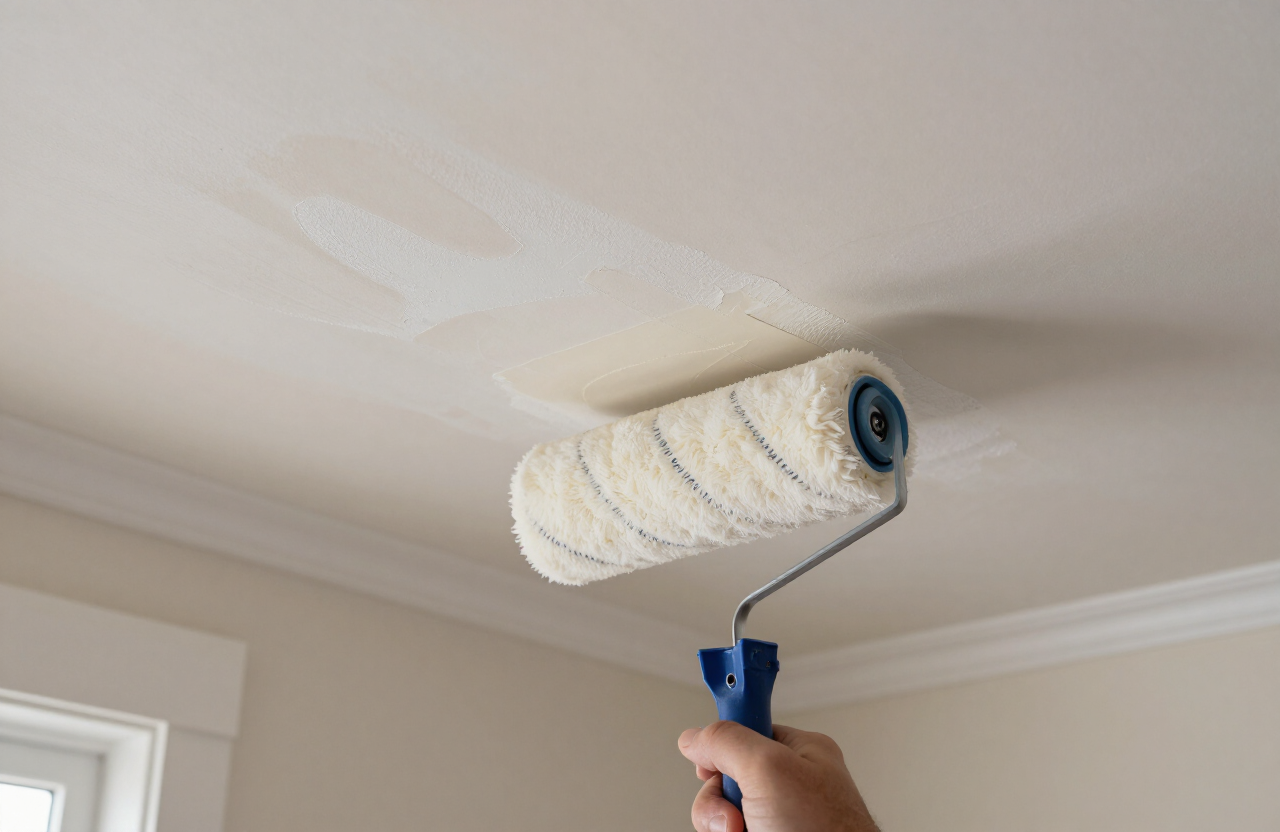
The process:
- Confirm the source is corrected — the leak or moisture issue must be fixed first, by the appropriate trade.
- Evaluate the substrate — damaged or soft drywall is repaired or replaced before repainting.
- Apply stain-blocking primer — a dedicated stain-blocking primer seals the residual discoloration so it does not bleed through.
- Finish coat — the finish coat goes on over the primed, sealed surface.
Painting does not solve an active moisture or mold problem. Underlying moisture issues must be identified and corrected first — by the appropriate trade — before any repainting. If we suspect active moisture or mold during the estimate, we will flag it so it can be addressed before painting begins.
Skim Coating
Skim coating is used to smooth uneven, textured, or heavily damaged walls — applying thin layers of joint compound across the entire surface, sanding between coats, and priming before painting. It is often the right approach on older Moonachie homes with walls that have accumulated layers of texture, patching, or damage over the years, or where a previous owner applied a heavy texture that needs to be smoothed out.
Skim coating is labor-intensive, so it is broken out as its own line in a written estimate. The result is a smooth, uniform surface that takes the finish coat evenly and looks professionally finished rather than patched together.
Sanding & Spot Priming
Sanding and spot priming are the final prep steps before the finish coat. Feather-sanding edges of repairs ensures a smooth transition between patched and unpatched areas. Spot priming repaired areas — and bare substrate where old paint was removed — ensures the finish coat adheres evenly and repairs do not telegraph through as dull or shiny spots.
These steps are small but critical. Skipping them is how repairs become visible after painting, even when the patching itself was done well.
Paint Preparation as a Deliberate Step
All of this — cleaning, patching, caulking, priming — is paint preparation, and it is a deliberate step before any finish coat goes on. A reputable painter treats prep as part of the project, not an afterthought. A written estimate breaks prep out as its own line so you can see exactly what is involved and why it matters.
For Moonachie homes and multifamily properties, proper wall preparation is the difference between a finish that lasts and one that fails early. See our drywall repair in Moonachie page for the full service process.
FAQs: Drywall Repair Before Painting in Moonachie, NJ
Do you repair drywall before painting in Moonachie?
Yes. We repair nail holes, settlement cracks, damaged drywall, previous repairs, and water-stained drywall before painting — raking cracks, filling with joint compound or spackle, sanding smooth, and priming so repairs do not telegraph through the finish coat. The finished paint is only as good as the surface underneath it, so a written estimate breaks prep out as its own line.
Can you paint over water stains after a leak is repaired?
Yes — once the source of the moisture has been corrected and the substrate is properly dry. We evaluate the surface, repair or replace damaged drywall as needed, and apply a stain-blocking primer so residual discoloration does not bleed through the new finish. Painting should happen only after the underlying moisture issue is resolved; painting over an active leak or still-wet substrate will fail. If we suspect active moisture or mold during the estimate, we will flag it so it can be addressed by the appropriate trade before painting begins.
How do you repair settlement cracks before painting?
We rake out the crack to widen it slightly so filler bonds into the gap, fill it with joint compound, feather the repair out beyond the crack edges, sand smooth, and prime the repaired area before painting. Simply painting over a hairline crack hides it only briefly — as the wall continues to settle, the new coating cracks with it. Proper crack repair is a prep step that protects the finish investment.
Can you patch large holes in drywall in Moonachie?
Yes. We patch larger holes using repair patches or replacement sections of drywall, secured and taped at the seams, then covered with joint compound in layers, sanded smooth, and primed before painting. The goal is a repair that blends seamlessly with the surrounding wall so it does not show through the finish coat.
Do you skim coat walls before painting?
Yes. Skim coating is used to smooth uneven, textured, or heavily damaged walls — applying thin layers of joint compound across the surface, sanding between coats, and priming before painting. It is often the right approach on older Moonachie homes with walls that have accumulated layers of texture, patching, or damage over the years. Skim coating is labor-intensive, so it is broken out as its own line in a written estimate.
Why is drywall repair important before painting?
Because the finished paint is only as good as the surface underneath it. Painting over damaged drywall, untreated stains, or unprimed repairs hides the problem only briefly — as the wall moves or the stain bleeds through, the new coating fails with it. Proper drywall and wall preparation is the step that protects your finish investment and extends the life of the paint job.
Do you repair drywall in Moonachie apartments and multifamily properties?
Yes. We repair drywall in Moonachie apartments, multifamily properties, and rental units — patching nail holes, anchor holes, scuffs, and impact damage between tenants, and repairing settling cracks and water stains as needed. For turnovers we patch and refresh walls before new tenants arrive, with durable finishes that hold up between leases.
How do I get a free drywall repair estimate in Moonachie?
Visit our Moonachie drywall repair page or contact form to request a free, no-obligation on-site estimate. We walk your Moonachie property to assess wall condition and prep requirements, then put repairs, prep, product, and schedule in writing before any work starts. Call (551) 391-5020 or request an estimate through our contact page.
Get a Free Drywall Repair Estimate in Moonachie, NJ
Hudson Line Painters is a licensed and insured painting contractor serving Moonachie and surrounding Bergen County communities, with 10+ years of experience, 100+ completed projects, and a 4.9-star rating backed by 70+ verified Google reviews. We handle drywall repair and wall preparation before painting — with expert surface preparation, premium Benjamin Moore and Sherwin-Williams finishes, and a 1-year workmanship warranty on every project.
Explore painters in Moonachie, NJ, review drywall repair in Moonachie, interior painting, cabinet painting, or request your free estimate today.